
News
News
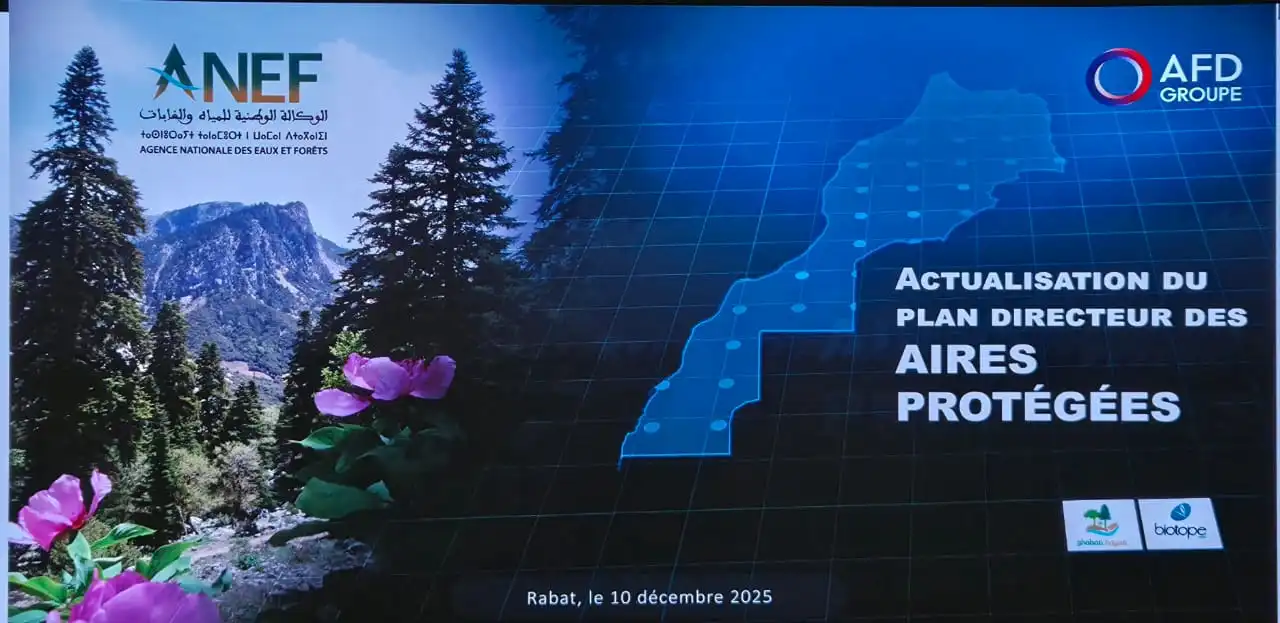
Morocco accelerates the expansion and connectivity of its protected areas network to achieve the 30% target of the Global Biodiversity Framework


Morocco is significantly strengthening its national biodiversity conservation framework to contribute to the implementation of the 30% target of the Kunming–Montreal Global Biodiversity Framework, which aims to ensure the effective conservation of at least 30% of terrestrial and marine areas by 2030.
In this context, the Kingdom is pursuing the expansion, diversification and coherence of its national network of protected areas, while improving ecosystem representativeness and ecological connectivity between natural spaces. This momentum is part of the strategic vision of the “Forests of Morocco 2020–2030” strategy, which places biodiversity at the heart of public policies and promotes sustainable, inclusive and ecosystem-based management.
Concrete and measurable progress
The efforts undertaken have led to the creation of eight new protected areas in 2025, bringing their total number to eighteen and increasing their overall surface area from 772,000 hectares to more than 1.27 million hectares. At the same time, the Protected Areas Master Plan has been updated to better integrate climate change considerations, ecosystem restoration priorities and ecological connectivity.
The network of Sites of Biological and Ecological Interest (SIBE) has also been strengthened, increasing from 154 to 197 sites and now covering more than 7.6 million hectares. This progress contributes to improved representation of Saharan, forest, coastal, steppe and wetland ecosystems, while consolidating essential ecological corridors that sustain ecological functions and ecosystem services.
Sustainable management, restoration and territorial valorization
The consolidation of the protected areas network is accompanied by the development and implementation of management and planning plans for national parks, setting out medium-term orientations for biodiversity conservation, habitat restoration, natural risk prevention and sustainable ecotourism development.
This approach promotes participatory governance, involving local authorities, local stakeholders, civil society and institutional partners, in order to ensure territorial ownership of projects and generate lasting socio-economic benefits for surrounding communities.
Prospects for strengthening the national network
Within this dynamic, Morocco is also continuing studies and preparations for the establishment of new protected areas, particularly in Saharan regions, such as the proposed Dakhla–Oued Ed-Dahab National Park, aimed at conserving unique ecosystems while supporting well-managed ecotourism and local value creation.
These efforts are supported by several technical and financial partners, including the Global Environment Facility, the European Union, the French Development Agency, as well as other bilateral and multilateral partners.
Through these actions, Morocco reaffirms its commitment to building a national network of protected areas that is ecologically representative, functionally connected and effectively managed, making a tangible contribution to achieving the 30% target of the Global Biodiversity Framework, while reconciling nature conservation, territorial development and the well-being of populations.