
Ecosystem
Ecosystem
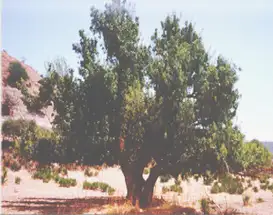
The Pistacia Trees
Published on
2021 Nov 10Countries

Morocco
Published on
2021 Nov 10Countries
Morocco
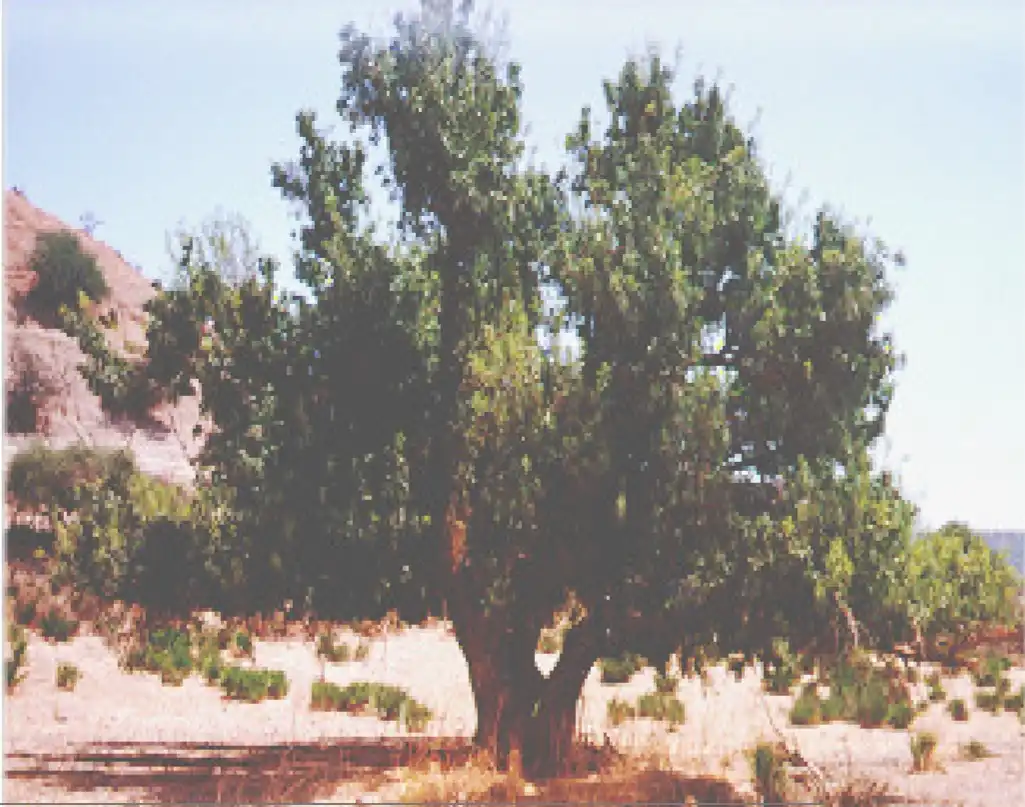
The Atlas pistachio tree or “Betoum” (Pistacia atlantica Desf., Anacardiaceae, Sapindales, Magnoliopsida) is also called “Betm” (Fennane M. et al., 2007). It is a powerful tree that can reach 20 m in height, with a well-individualized trunk and deciduous leaves (Benhssaini and Belkhodja, 2004).
The Atlas pistachio tree can be classified into four subspecies, namely mutica, cabulica, kurdica and atlantica; the latter is present in North Africa (Benhssaini and Belkhodja, 2004). These same subspecies have the same chromosomal formula of 2n=28 (Ghaffari et al., 2003).
This forest species, called shellfish, adapts to all soils, except sand. It is content with a low rainfall of the order of 150 mm and sometimes less (Benhssaini and Belkhodja, 2004). The growth of P. atlantica is very slow, but it has the advantage of being the only tree in Morocco that can organize pre-forest ecosystems into arid and semi-arid bioclimates. At present, it no longer forms pure populations; it is frequently mixed with thuja de Berbérie (Benabid and Fennane, 1994). The phytogeographical map of Morocco (Emberger, 1939) shows that the Atlas pistachio tree and the jujube tree were a climax on the arid highlands of eastern Morocco. This vegetation, which has now disappeared except around a few marabouts, allowed the life of a very rich wildlife: gazelles, lions, lynx, hyena, etc. (Benabid, 1986).
At the rate of 2 to 4% of disappearance per year of Mediterranean forest areas, depending on the country, theoretically, in a few decades, there should only remain less than half of the current areas covered by forests (Quezel et al., 1999). Thus, the pistachio tree in the Atlas of the Eastern Region of Morocco is in a precarious and alarming situation because of its extensive degradation. The use of its wood to make soap has certainly accelerated its degradation (Benabid, 1986). Other factors such as pests, diseases, and drought contributed to its degradation (Benhssaini and Belkhodja, 2004).
Published on
2021 Nov 10Countries
Morocco