News
News
Published on
2025 Dec 15Discovery of a new endemic ant species enriching the biodiversity of the Anti-Atlas Mountains.
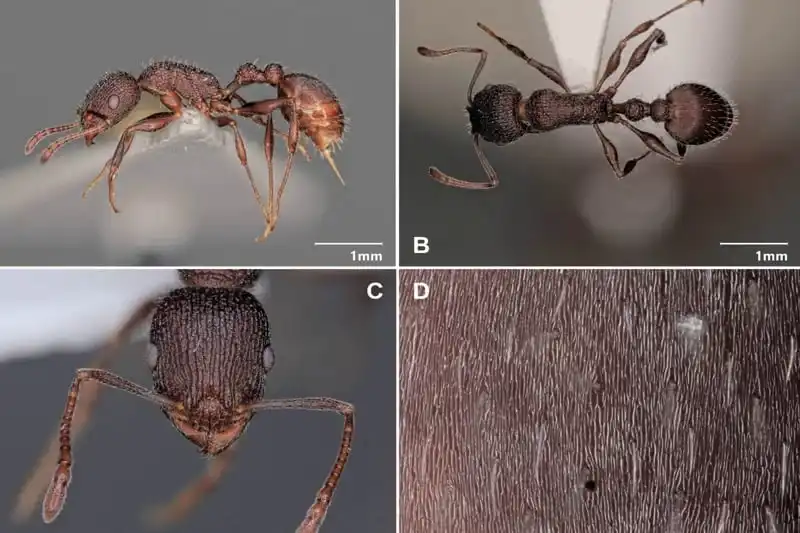
An international team of researchers, led by Professor Ahmed Taheri of Abdelmalek Essaâdi University, has just officially announced the discovery of a new species of ant in the Chtouka Aït Baha region. Named Temnothorax lailae, this major discovery consolidates the Kingdom's position as a key player in Mediterranean biodiversity.
A major contribution to national entomology
Published in the prestigious scientific journal Insect Systematics and Diversity, the work carried out by Professor Taheri's team highlights the biological richness of Moroccan ecosystems. The new species, Temnothorax lailae, was identified in the locality of Tanalt (Anti-Atlas).
This discovery is the result of a major taxonomic review of the Temnothorax rottenbergii group. The study was based on a comparative analysis of 527 specimens collected from 170 sites across the Mediterranean basin, confirming the genetic and morphological uniqueness of this Moroccan species.
A species adapted to extreme environments
Microscopic analyses revealed that Temnothorax lailae is distinguished by specific characteristics, including its small size, dark color, and adapted morphology. According to researchers, it is a specialized species that thrives strictly in cold, high-altitude environments, habitats that few similar species are able to colonize.
Morocco, the second most diverse region for ants in the Mediterranean
Beyond its taxonomic interest, this discovery is of strategic importance for the country's natural heritage. With the addition of this new species, Morocco now has seven species of ants from the Temnothorax rottenbergii group recorded on its territory, a record for North Africa.
These results now place Morocco in second place in terms of diversity for these insects in the Mediterranean region, just behind Turkey. This breakthrough highlights the exceptional potential of Morocco's mountainous areas and microclimates, calling for increased support for scientific research and the preservation of these unique natural habitats.